Push Mower Vs Self Propelled Mower: Top Choice For Lawns
Push mowers are simple and cheap; self propelled mowers cost more but greatly reduce effort.
I’ve spent years mowing lawns with both tools. I wrote this guide on push mower vs self propelled mower to help you pick the right machine for your yard, your body, and your budget. I’ll explain how each works, when one beats the other, and share real tips I learned from daily use.

How push mowers and self propelled mowers work
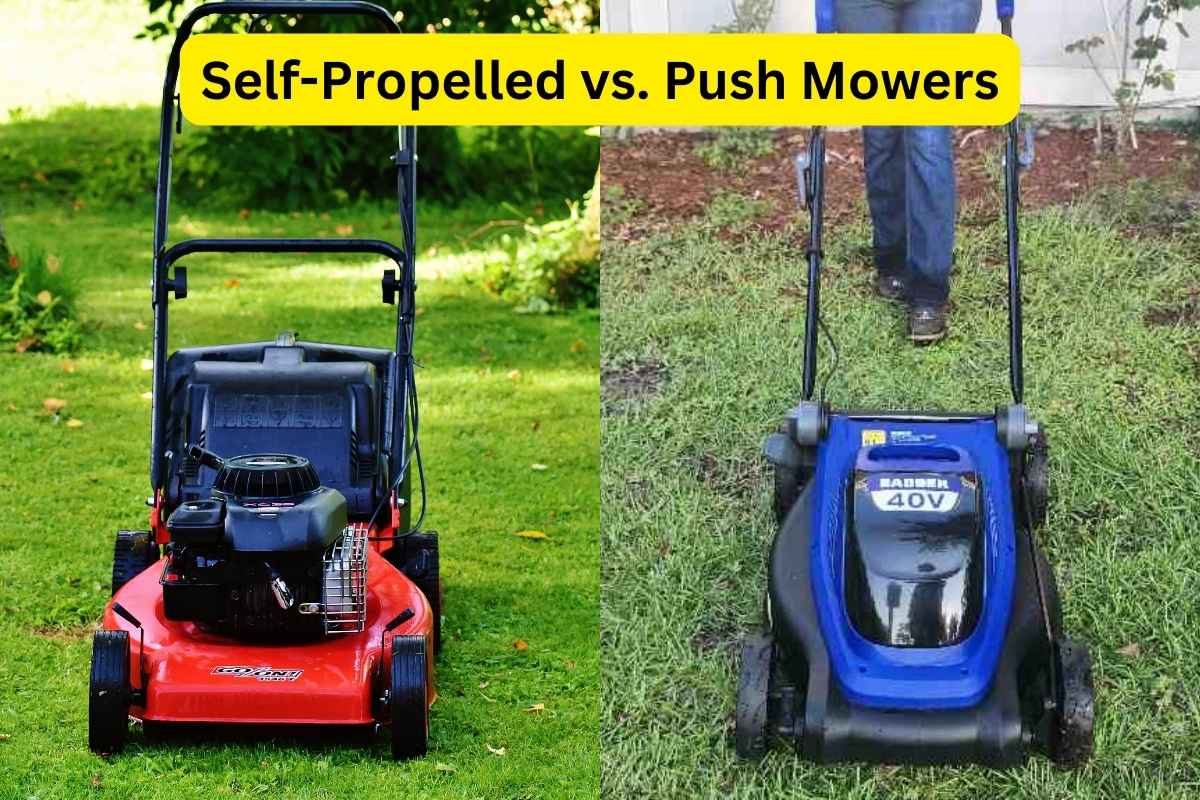
A push mower relies on you to move it. You walk behind and push the mower across the grass. Cut power is mechanical or from a small engine or battery. The mower blade spins and the wheels roll as you push.
A self propelled mower uses a drive system to move the wheels for you. You still guide the mower, but the engine or motor powers forward motion. That reduces effort on slopes and large lawns. When comparing push mower vs self propelled mower, the main difference is who does the work of moving the mower.
Common drive types include rear-wheel drive, front-wheel drive, and all-wheel drive. Some self propelled mowers give variable speeds and cruise control. These features change how the mower handles and how tired you feel after mowing.

Key differences at a glance
- Cost
- Push mowers are usually cheaper to buy and repair.
- Self propelled models cost more up front and may cost more to maintain.
- Effort
- Push mower vs self propelled mower: push models need more physical effort.
- Self propelled mowers cut strain on knees and back.
- Control and maneuverability
- Push mowers feel lighter and easier to turn in tight spaces.
- Self propelled mowers can be harder to spin around but easier to push uphill.
- Yard size and terrain
- Push mowers work well for small, flat yards.
- Self propelled mowers are better for larger yards and uneven ground.
- Weight and storage
- Push mowers are lighter and compact.
- Self propelled mowers are heavier and need more storage room.
Pros and cons of push mowers
- Pros
- Lower purchase price and fewer parts to break.
- Lighter and easier to lift into storage or a truck.
- Good for short, flat yards and tight corners.
- Cons
- Requires more physical effort, especially on big lawns.
- Not ideal for slopes or thick turf.
- May take longer to finish large areas.
My experience: I used a classic push mower on a 1/10-acre yard. It was quick and quiet. After a while, my shoulders started to ache when grass was tall. That taught me to mow more often or consider a self propelled mower for larger areas.

Pros and cons of self propelled mowers
- Pros
- Less physical strain and faster mowing on bigger lawns.
- Better performance on slopes and rough ground.
- Many models have variable speeds and cruise control.
- Cons
- Higher cost and more complex mechanics.
- Heavier to lift and store.
- Repairs can be more expensive.
From my tests, a self propelled mower cut down mowing time by nearly half on a 0.5-acre yard. It saved my knees and let me mow less often without fatigue. But I had to learn basic drive system care to avoid breakdowns.
Choosing by yard size, terrain, and health
- Small flat yard (under 1/4 acre)
- Push mower often wins for cost and simplicity.
- Medium yard (1/4 to 1 acre)
- Self propelled mower is usually better for speed and comfort.
- Large yard (over 1 acre)
- Consider a high-capacity self propelled or a ride-on mower.
- Slopes and uneven ground
- Self propelled models with rear-wheel or all-wheel drive offer safer control.
- Physical limits or mobility issues
- Self propelled mower reduces strain and risk of injury.
When thinking about push mower vs self propelled mower, match the tool to your yard and your body. If you have bad knees, a self propelled mower is often worth the investment.

Performance, fuel, and power options
- Gas models
- Strong power and long run time.
- More maintenance and emissions.
- Electric corded models
- Quiet and low maintenance.
- Limited by cord length.
- Battery (cordless) models
- Clean and convenient for small to medium yards.
- Battery life limits run time; extra batteries help.
- Reel mowers (manual push)
- Very quiet and eco-friendly.
- Best for well-kept, short grass.
In the push mower vs self propelled mower debate, both types come in gas, corded electric, and battery versions. Choose a power source that fits your yard size and your tolerance for maintenance.
Maintenance, cost of ownership, and lifespan
- Routine tasks for both
- Keep blades sharp for a clean cut.
- Empty grass bag and clear deck of clippings.
- Check and tighten fasteners.
- Extra care for self propelled mowers
- Inspect drive belts and cables.
- Service transmission or wheel drive components.
- Cost tips
- Replace blades yearly or as needed.
- Use fuel stabilizer for gas models if stored seasonally.
- Store batteries inside in cold months to extend life.
Over years, a push mower can cost less to run. But a self propelled mower saves time and may prevent medical costs from strain. Calculate total cost of ownership, not just sticker price.

Personal experience, mistakes to avoid, and practical tips
- My experience
- I switched from push to self propelled when my lawn grew to half an acre. The change saved time and my knees.
- I once bought a heavy self propelled model without testing the handle height. It caused shoulder strain until I adjusted it.
- Mistakes to avoid
- Don’t buy a mower that is too powerful or too heavy for your needs.
- Don’t ignore blade sharpening; dull blades stress the engine and harm grass.
- Practical tips
- Test the feel before you buy. Walk a few paces behind both types.
- For mixed terrain, choose a self propelled model with adjustable speed.
- Mow more often to keep grass short and easier to cut.
When weighing push mower vs self propelled mower, try both in a store or borrow from a friend. Hands-on experience tells you what feels right.

3 common quick questions (short, direct answers)
What if my yard has tight corners?
- A push mower often wins in tight spaces. It turns easier and feels lighter.
Can I convert a push mower to self propelled?
- Not easily. The drive system is built into self propelled models. Conversion is usually not cost effective.
Do electric self propelled mowers exist?
- Yes. Battery-powered self propelled mowers combine low noise and assisted drive for many yards.
Frequently Asked Questions of push mower vs self propelled mower
Is a push mower better for small yards?
A push mower is usually better for very small and flat yards because it is cheaper and easier to store. It works well if you don’t mind the extra exercise.
How much faster is a self propelled mower?
A self propelled mower can cut mowing time significantly, often reducing effort and time by 25–50% on medium to large yards. Exact speed depends on yard size and terrain.
Are self propelled mowers harder to maintain?
They can be slightly harder to maintain due to extra drive parts, but basic care like blade sharpening and oil checks remains the same. Regular checks prevent most issues.
Will a self propelled mower handle steep hills safely?
Many self propelled mowers handle hills better than push mowers, especially rear-wheel and all-wheel drive models. Use caution and follow the manufacturer’s slope limits.
Which mower gives a cleaner cut?
Blade sharpness matters most. Both push and self propelled mowers give a clean cut when blades are sharp and mower deck is well maintained.
Conclusion
Choosing between a push mower vs self propelled mower comes down to yard size, terrain, physical ability, and budget. Push mowers are simple, light, and cost-effective for small yards. Self propelled mowers reduce effort and save time for larger or rough lawns. Think about who will use the mower, how often you’ll mow, and how steep or wide your lawn is.
Take action: try both types if you can, compare comfort and handling, and pick the one that fits your life. If this article helped, leave a comment with your yard size and I’ll share a model suggestion.