Natural Pest Control Vs Chemical Pest Control: 2026 Guide
Natural methods are safer and long-term; chemicals work fast but carry more risks.
If you want a clear, honest breakdown of natural pest control vs chemical pest control, you are in the right place. I’ve managed homes, gardens, and commercial spaces, and I’ve tested both paths in real scenarios. In this guide, I compare how each method works, when to use them, and how to blend them for the best results. You’ll get practical tips, research-backed insights, and simple steps you can use today.

What is natural pest control?
Natural pest control uses living enemies, plant-based products, and smart habits to reduce pests. The goal is balance, not a blank slate. You focus on prevention and targeted action.
Common natural methods:
- Beneficial insects such as ladybugs, lacewings, and parasitic wasps eat soft-bodied pests.
- Botanical and microbial products like neem oil, Bt, spinosad, and horticultural soap.
- Physical controls including traps, sticky cards, row covers, and diatomaceous earth.
- Cultural practices such as pruning, sanitation, sealing entry points, and crop rotation.
Benefits:
- Lower risk to people, pets, pollinators, and soil life.
- Less chance of chemical resistance over time.
- Better fit for kitchens, schools, and organic gardens.
Limits:
- Often slower to act and may need repeat use.
- Results depend on good timing and correct IDs.
- Severe infestations may need more than one tool.
When deciding on natural pest control vs chemical pest control, it helps to set clear goals. Do you want quick knockdown or safer, steady control? Your answer shapes your plan.

What is chemical pest control?
Chemical pest control relies on synthetic pesticides. These include insecticides, herbicides, fungicides, and rodenticides. Many give fast knockdown and longer residual action.
How they work:
- Contact products kill on touch or spray.
- Systemic products move inside plants to stop pests that feed.
- Residual products stay active on surfaces for days or weeks.
Benefits:
- Rapid results for urgent issues and health risks.
- Easier to scale for large areas or major outbreaks.
- Predictable performance when used as labeled.
Risks and limits:
- Higher risk of harm to bees, fish, and helpful insects.
- Possible residues on surfaces and food crops.
- Resistance can build when one active is used too often.
If you compare natural pest control vs chemical pest control by speed, chemicals win. But if you compare by safety and long-term impact, natural tools lead.
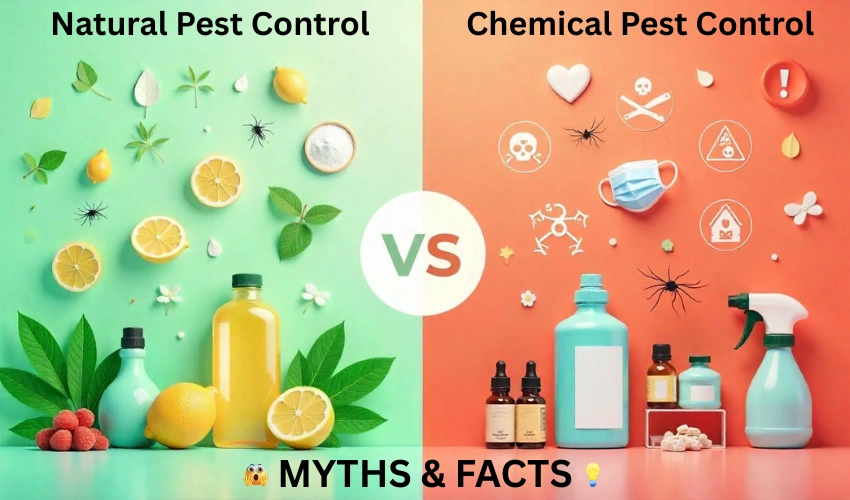
Natural pest control vs chemical pest control: key differences
Let’s compare the two approaches side by side. This helps you pick the right tool at the right time.
Effectiveness and speed:
- Chemicals often give fast knockdown and strong residual.
- Natural methods can be slower but steady with good timing.
Safety and exposure:
- Natural tools tend to be safer for kids, pets, and pollinators.
- Chemicals may need strict PPE, re-entry times, and label limits.
Specificity:
- Natural controls can be very targeted, like Bt for caterpillars.
- Many chemicals are broad-spectrum and can hit non-targets.
Resistance:
- Natural methods lower resistance pressure with diverse tactics.
- Repeated use of one chemical class speeds resistance.
Environment:
- Natural options protect soil microbes and water bodies.
- Chemicals can drift, runoff, or leave residues if misused.
Cost and labor:
- Natural methods may need more scouting and hands-on work.
- Chemicals can save labor in the short term but may add safety costs.
Regulation:
- Natural and chemical tools both have labels to follow.
- Chemical labels often include more strict safety rules.
In the big picture of natural pest control vs chemical pest control, context matters. Your site, pest, and risk tolerance drive the best choice.

When to choose natural vs chemical: a simple decision framework
Use this quick framework to guide your next move.
Start with proper ID and thresholds:
- Confirm the pest and life stage before you act.
- Set an action threshold. A few ants in spring? Watch and wait. Roaches in a kitchen? Act now.
Weigh risk and speed:
- Choose chemicals when there is a health risk or fast spread.
- Favor natural tools when food, pollinators, or pets are at risk.
Match tool to place:
- Indoors and food areas often favor baits, traps, and sanitation.
- Gardens and landscapes benefit from beneficial insects and barriers.
Think long term:
- Use chemicals for knockdown, then switch to natural methods for upkeep.
- Rotate modes of action to reduce resistance risk.
Budget and effort:
- If labor is limited, a one-time chemical may help.
- If you can scout weekly, natural methods pay off.
This is where natural pest control vs chemical pest control stops being either-or. The best plans blend both with care.
Integrated Pest Management (IPM): the balanced path
IPM is a step-by-step plan that reduces risk and waste. It blends prevention, monitoring, and targeted control.
Core steps:
- Monitor and identify. Use sticky cards, traps, and regular checks.
- Set thresholds. Not every pest needs action right away.
- Prevent first. Seal gaps, remove clutter, clean drains, and prune.
- Use least-risk controls. Start with traps, baits, and botanicals.
- Escalate if needed. Use chemicals in a precise, limited way.
- Review and adjust. Track what worked and what did not.
A real-world flow:
- Ants in a kitchen: bait, caulk, clean trails, and trim plants touching the house.
- Aphids on roses: blast with water, release ladybugs, spot-treat with neem if needed.
- Wasps near a play area: remove old nests at night, set traps early, and target-spray only if they rebuild.
IPM turns natural pest control vs chemical pest control into a smart system. It saves money, reduces risk, and keeps control steady.

What I’ve learned in the field: wins, misses, and fixes
- I released ladybugs at dusk after rinsing plants. I backed it up with neem oil a week later. Aphids dropped fast, and blooms stayed healthy.
German roaches in a rental:
- Glue boards showed hot spots near the fridge. I used gel baits and dust in wall voids. One light residual spray in cracks sealed the win. The unit stayed clean with better trash control.
Ticks on a woodland edge:
- First try with essential oils failed. I added yard cleanup, buffer zones, and tick tubes. A spring and fall perimeter spray plus habitat fixes cut bites to near zero.
Termites under a porch:
- I passed on DIY. I called a licensed pro for bait stations and a wood repair plan. That mix stops hidden damage. This is where natural pest control vs chemical pest control is not a fair fight; structure safety comes first.
These cases show a theme: start low risk, measure, then escalate with care.
Costs, rules, and safety you should not ignore
Smart pest control is also about safety and the law.
What to check:
- Labels and safety data. The label is the law.
- Personal protection. Gloves, eye wear, and masks as required.
- Re-entry times for treated rooms or fields.
- Pre-harvest intervals for edible plants.
- Water and pollinator safety. Avoid bloom sprays and drift.
- Storage and disposal. Keep out of reach and never pour down drains.
Budget tips:
- Fix the source. Moisture, crumbs, and clutter feed pests.
- Buy concentrates if you have many areas to treat.
- Track what you use. It prevents repeat buys and improves results.
When you weigh natural pest control vs chemical pest control, include these hidden costs. Safety steps and time add up, but they protect your home and health.

Common pests and best-fit controls
Ants:
- Natural: bait stations, diatomaceous earth, caulk trails, remove food sources.
- Chemical: non-repellent gel baits and limited crack-and-crevice sprays.
Roaches:
- Natural: sanitation, vacuuming, sticky traps, desiccant dusts.
- Chemical: gel baits, insect growth regulators, and targeted residuals.
Mosquitoes:
- Natural: dump standing water, BTI dunks, fans on patios, wear repellent.
- Chemical: larvicides in water features, precise barrier sprays.
Aphids and whiteflies:
- Natural: hose them off, neem oil, beneficial insects, reflective mulch.
- Chemical: insecticidal soap, selective systemic options if the crop allows.
Termites:
- Natural: moisture control, remove wood-to-soil contact, physical barriers.
- Chemical: professional bait systems and soil termiticides.
Rodents:
- Natural: seal gaps, clean food zones, snap traps, habitat cleanup.
- Chemical: secured bait stations when trapping and sealing are not enough.
Bed bugs:
- Natural: high-heat treatment, bagging, steam, and encasements.
- Chemical: careful use of residuals and dusts by trained pros.
This mix shows how natural pest control vs chemical pest control plays out by species. Some pests bend to gentle tools; others need heavy backup.
Mistakes to avoid and pro tips
Pitfalls:
- Skipping ID and spraying the wrong product.
- Treating once and stopping. Most pests need follow-ups.
- Ignoring sealing and sanitation, which fuel re-infestation.
- Overusing one chemical class and driving resistance.
Pro tips:
- Rotate active ingredients and tactics.
- Treat at the right life stage. Young pests are easier to stop.
- Use spot treatments, not broad sprays, when possible.
- Keep a pest log. Dates, products, weather, and results.
Use this list when weighing natural pest control vs chemical pest control. It keeps your plan simple, safe, and effective.
Frequently Asked Questions
Is natural pest control enough for serious infestations?
It can help, but severe infestations often need a combined plan. Start with natural steps and add targeted chemicals if needed.
Are chemical pesticides safe around kids and pets?
They can be used safely when you follow the label. Choose baits and enclosed stations, and respect re-entry times.
Will natural methods work faster if I use more?
No. Overuse can harm plants or helpful insects. Follow the label and repeat at the right interval.
How do I prevent pests without spraying?
Seal entry points, fix leaks, reduce clutter, store food well, and clean often. These steps cut pest pressure at its source.
What is the best way to compare options for my home?
Use an IPM checklist. Identify the pest, set a threshold, try the least-risk method first, then scale up only if needed.
Conclusion
Natural pest control vs chemical pest control is not a battle. It is a toolbox. Start with prevention and targeted, low-risk steps. If the problem is urgent or high risk, add precise chemical tools and follow the label. Track results and adjust.
Ready to act today? Pick one area, set a simple IPM plan, and test for two weeks. Want more tips like this? Subscribe for updates or drop a question in the comments.