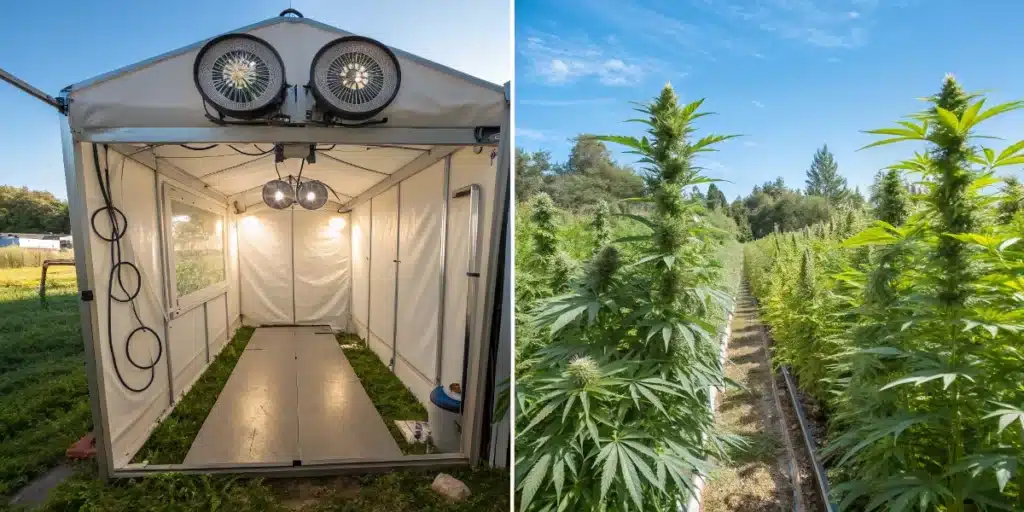
Greenhouse Vs Indoor Grow Tent: Which Is Best In 2026
Choose a greenhouse for space and sun; pick a grow tent for control and privacy.
If you’re torn between a greenhouse vs indoor grow tent, you’re in the right place. I’ve built both for herbs, leafy greens, and fruiting crops. I’ll break down costs, yields, climate control, pests, and real setup tips. By the end, you’ll know which option fits your space, budget, and goals—and how to avoid common mistakes.

Greenhouse vs indoor grow tent at a glance
Before you invest, it helps to see how a greenhouse vs indoor grow tent compares. One leans on free sunlight and space. The other delivers tight control and year-round repeatability.
Definitions
- Greenhouse: An outdoor or attached structure that uses sunlight, vents, and sometimes heaters and fans.
- Indoor grow tent: A fabric enclosure with reflective walls, fans, filters, and grow lights set up inside a room.
Quick differences
- Light: Greenhouse uses the sun and can add lights. Grow tent depends on LEDs.
- Climate: Greenhouse swings more with the seasons. Grow tent is dialed in all year.
- Costs: Greenhouse has higher build cost but lower light energy. Grow tent is cheaper to start but uses more power.
- Pests: Greenhouse has more exposure. Grow tent is easier to keep clean and sealed.
- Space: Greenhouse scales big. Grow tent fits in a closet or spare room.
Simple comparison
| Factor | Greenhouse | Indoor grow tent |
|---|---|---|
| Light source | Sun + optional LEDs | LEDs only |
| Climate control | Moderate to high | High and precise |
| Upfront cost | Medium to high | Low to medium |
| Energy use | Lower for light | Higher for light |
| Pest risk | Higher | Lower |
| Stealth/privacy | Low | High |
| Scale | Small to very large | Small to medium |
A clear, fair take on greenhouse vs indoor grow tent starts with your goals. Think about light needs, noise, neighbors, and your power bill. The best choice is the one that you can run well every day.

Pros and cons of each route
Every choice has trade-offs. Here’s how greenhouse vs indoor grow tent stacks up when you look at the day-to-day.
Greenhouse pros
- Free sunlight with natural spectrum.
- Room to scale and work.
- Great for fruiting crops and vines.
- Lower light energy cost per square foot.
Greenhouse cons
- Weather swings can stress plants.
- Pests enter through vents and doors.
- Heating or cooling can get pricey.
- Less privacy; may need permits.
Indoor grow tent pros
- Precise control over light, temp, humidity, and CO2.
- Clean and sealed; fewer pests and spores.
- Fast crop cycles year-round.
- Stealthy and easy to move.
Indoor grow tent cons
- 100% dependent on electricity for light.
- Limited space and plant height.
- Heat and noise from fans and lights.
- Carbon filters need upkeep.
From years of running both, I’ve learned this: control is king for quality and repeatability. Scale and sun win for volume and cost per pound. Your best bet depends on which reward you value more.
Costs, energy, and ROI
Let’s put numbers to greenhouse vs indoor grow tent so you can plan with a clear head.
Typical startup costs
- Small greenhouse (6×8 ft): $400–$2,000 for a kit; add $200–$800 for fans, vents, and shelves.
- Mid backyard greenhouse (10×16 ft): $1,500–$5,000; add $500–$1,500 for upgrades and heat.
- Indoor grow tent kits (2×4 to 4×4 ft): $250–$1,200 including tent, LED, fans, and filter.
Monthly energy snapshot (example)
- 4×4 ft tent with a 400–600 W LED, fans, and dehumidifier: about 500–900 kWh/month if run 18 hours/day for veg and 12 for bloom.
- Greenhouse with small fans and a heater in winter: 100–400 kWh/month, but gas or electric heat can spike in cold snaps.
Lighting guidance
- Leafy greens and herbs: 15–25 W/sq ft LED.
- Fruiting crops and high-light herbs: 25–40 W/sq ft LED.
- In greenhouses, you may add 5–15 W/sq ft in winter to hit target light.
Example ROI thought check
- If power is $0.15/kWh and your 4×4 tent uses 700 kWh/month, that’s about $105/month for power.
- If a 10×16 greenhouse needs 200 kWh/month plus some gas heat, your light cost is low, but heat bills vary by climate.
Bottom line on greenhouse vs indoor grow tent: tents cost less to start but more to run per square foot. Greenhouses cost more to build but win on energy if your climate is mild and sunny.

Climate, light, and environment control
Control decides yield and quality. Here’s how greenhouse vs indoor grow tent compares on the dials that matter.
Light and DLI
- Greenhouse: You chase the seasons. Winter sun may not meet daily light integral for fruiting crops. Many growers add LEDs to hit targets.
- Grow tent: You set PPFD and photoperiod. Hitting a DLI target is easy and repeatable.
Temperature and humidity
- Greenhouse: Big swings day to night. Thermal mass, shade cloth, vents, and heaters help.
- Grow tent: Tight bands are easy with AC, dehumidifiers, and controllers.
CO2 and airflow
- Greenhouse: Natural air exchange. CO2 can dip with tight sealing.
- Grow tent: Simple to enrich and hold CO2 if the room is sealed and safe.
Tip from the field: in my first winter greenhouse, I tried to push peppers. Cloudy weeks cut light so much that fruit stalled. In a tent, the same plants kept setting fruit due to stable PPFD and a steady VPD window.

Pest, disease, and cleanliness
Clean rooms grow clean plants. This is a key split in greenhouse vs indoor grow tent.
Greenhouse risks
- Mites, aphids, and thrips ride in with wind and on clothes.
- Fungal spores love cool, wet mornings.
- Soil and weeds near the walls host pests.
Grow tent edge
- Sealed tents with intake filters cut pest pressure.
- Surfaces wipe clean fast. Less dust and pollen.
- Simple IPM works: sticky cards, weekly leaf checks, and a cleaning schedule.
Best practices I use
- Change shoes or use boot covers at entries.
- Keep a log for issues and actions.
- Quarantine new plants for 10–14 days.
- In tents, run a pre-filter and change carbon on schedule.

Yields, quality, and what to grow
What you plant should fit the space. Matching crop to system is half the win in greenhouse vs indoor grow tent.
Greenhouse-friendly crops
- Tomatoes, cucumbers, peppers, beans, strawberries, and cut flowers.
- Tall trellis crops and long-season fruit love the space and sun.
Grow tent-friendly crops
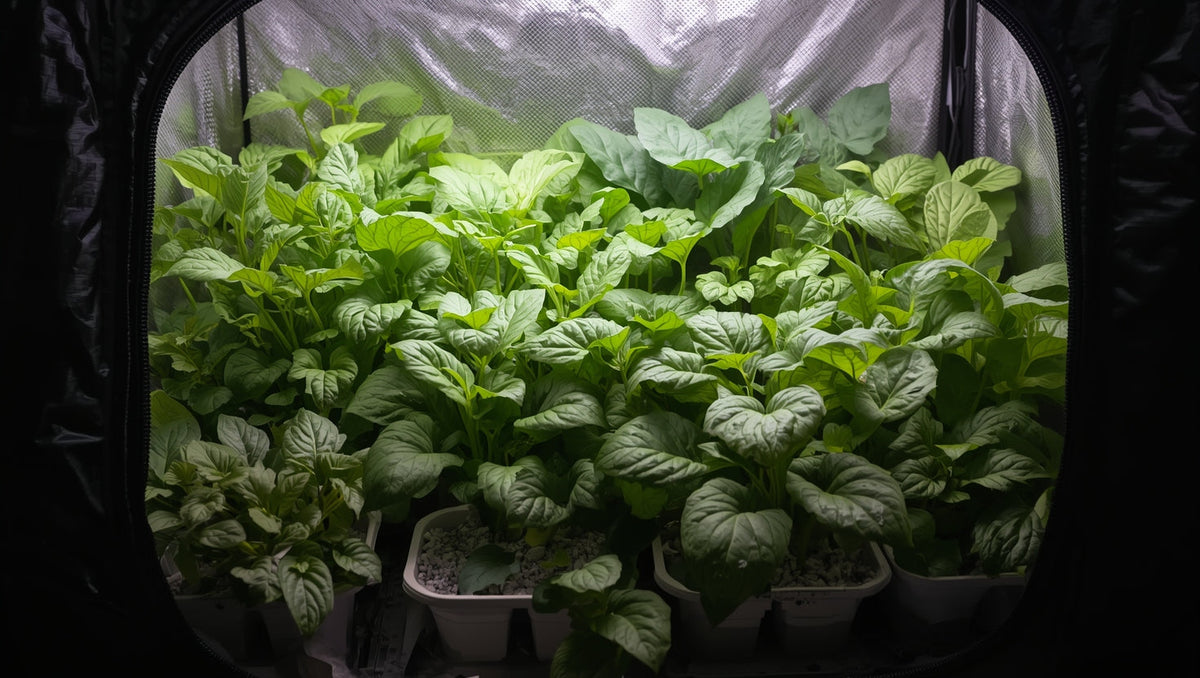
- Basil, mint, cilantro, dill, parsley, microgreens, leafy greens, and compact peppers.
- High-value, short plants that like tight control.
Yield notes
- Fruiting crops need high DLI. In a tent, you can give it every day. In a greenhouse, winter sun may block peak yields without lights.
- Leafy greens crank in tents with fast turns. In greenhouses, spring and fall shine.
Quality tip: indoors, I see tighter node spacing and cleaner leaves. In greenhouses, fruit tastes rich with real sun. Both can be great when tuned well.

Space, scalability, and where you live
Greenhouse vs indoor grow tent also depends on space, neighbors, and rules.
Space and noise
- Tents fit in closets, basements, and spare rooms.
- Fans and dehumidifiers make noise. Use rubber pads and duct mufflers.
- Greenhouses need a yard or driveway pad and access to power and water.
Scalability
- Greenhouses scale fast and cheap per square foot.
- Tents scale in steps. 2×4, then 4×4, then multiple tents. Simple but power adds up.
Privacy and smell
- Tents with carbon filters are discreet.
- Greenhouses are visible. They can also vent smells.

Legal, safety, and privacy notes
Safety first. Then think about permits and neighbors. This applies to both sides of greenhouse vs indoor grow tent.
Electrical and moisture
- Use GFCI outlets and drip loops.
- Do not overload circuits. Check amperage and wire gauge.
- Keep cords off wet floors and use rated extension cords only if needed.
Heat, CO2, and air
- Vent heaters and burners per code.
- If enriching CO2, use a monitor with alarms.
- Place fire extinguishers nearby.
Permits and HOA
- Some cities need permits for structures over set sizes.
- HOAs may restrict visible greenhouses.
- Be open with neighbors if you can. It avoids headaches.
How to choose: a simple decision guide
Use this fast filter to pick a side in the greenhouse vs indoor grow tent debate.
Ask yourself
- Do you need privacy and year-round control? Choose a grow tent.
- Do you have a sunny yard and want space to scale? Choose a greenhouse.
- Is your power cost high? Lean greenhouse. Cold winters may offset this with heat bills.
- Are pests a worry? Lean grow tent with filters.
- Do you grow tall vines? Lean greenhouse. Compact, fast crops? Lean tent.
Sample profiles
- Apartment cook who loves herbs: 2×4 tent with a 200–300 W LED, quiet fans, and a small filter.
- Backyard hobbyist with sun: 10×16 greenhouse with vents, shade cloth, and a small heater for shoulders.
- Side-hustle microgreen grower: Two 2×4 tents or racks with LEDs and timers for tight turns.
Setup tips from experience
I’ve made the mistakes so you don’t have to. These apply to both greenhouse vs indoor grow tent builds.
Practical tips
- Start smaller than you think. It is easier to learn and scale.
- Buy a PAR meter or use a trusted map. Guessing light slows growth.
- Size your dehumidifier. Water in equals water out.
- Label plants and track feed, temp, RH, and notes.
- In greenhouses, add shade cloth and thermal mass. It smooths swings.
- In tents, use a fan speed controller and duct silencer. Your ears will thank you.
- Keep a spare fan and timer. Small failures cause big losses.
Mistakes to avoid
- Pushing fruiting crops in a low-light winter greenhouse with no LEDs.
- Ignoring intake air in a tent. Dirty air, dirty leaves.
- Skipping quarantines. One thrip becomes a wave.
Frequently Asked Questions
Is a greenhouse cheaper than a grow tent?
A greenhouse can be cheaper to run for light, since it uses the sun. A grow tent is cheaper to start but often costs more each month due to lighting.
Which gives better yields: greenhouse or grow tent?
For leafy greens and herbs, a well-lit tent is very consistent. For big fruiting crops, a greenhouse with strong sun can win, if climate and pests are managed.
What size tent replaces a small greenhouse?
Two 4×4 tents can match a small hobby greenhouse for herbs and greens. For tall vines, tents struggle due to height and trellis needs.
Do I need supplemental lights in a greenhouse?
In winter or cloudy regions, yes for steady yields. LEDs help hit daily light goals and keep fruit set on track.
How do I control humidity in a tent?
Use a dehumidifier sized to plant load, strong airflow, and a controller. Keep intake air dry and run lights and fans on stable schedules.
Can I grow year-round in a greenhouse?
Yes, but it depends on climate and heating. Many growers shift crops by season or add heat and lights in winter.
Conclusion
Both paths work. A greenhouse shines with sun, space, and scale. An indoor grow tent shines with control, privacy, and repeatable results. Your local weather, power rate, and crop list make the final call.
Pick one, start small, and track your data. Tweak light, airflow, and water. If this guide on greenhouse vs indoor grow tent helped, subscribe for more hands-on tips, or drop a comment with your setup and goals.